

The NY Primaries

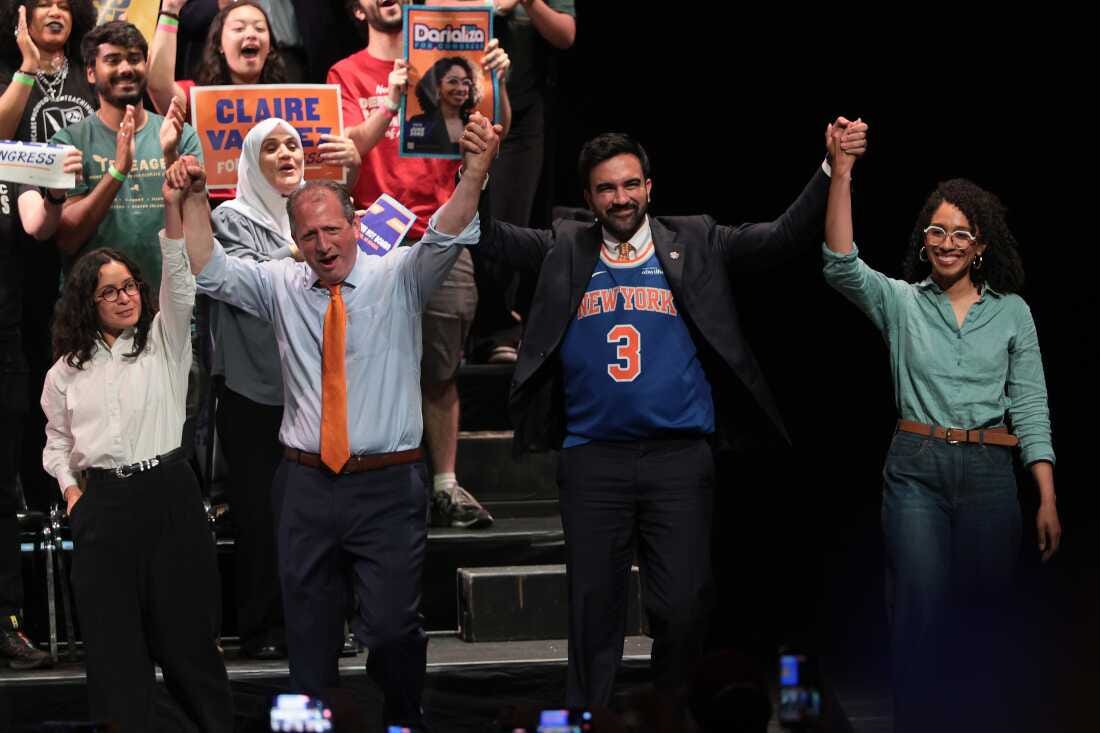
There were some big primaries in New York this week. In particular, 3 left-leaning candidates, Brad Lander, Claire Valdez, and Darializa Avila Chevalier, won their Congressional primaries, meaning they will certainly be among the newest crop of Democratic members of Congress come January. Valdez and Chevalier identify as DSA members, or Democratic Socialists.
Before I return to them, a note on Alex Bores losing a tightly contested Congressional primary to Micah Lasher in NY-12. Alex Bores and Micah Lasher were both State Assemblymembers with real ties to the community and ran strong campaigns. Nearly $28 million was spent by AI PACs on this race as a proxy war on AI regulation, because Alex Bores had sponsored some very sensible legislation on AI guardrails while a state rep in Albany. That’s why I like him and supported him. Alex Bores lost, but so did the AI lobby strangely enough; the spending was so rampant that people became dubious as to why they were seeing so much about this one guy. Micah Lasher after his victory said, “The AI companies are going to be disappointed if they think I’m going to go easy on them.” Alex lost but his viewpoint won.
As significant as that race was, even more attention is being paid to the other 3 incoming members of Congress. Brad Lander defeated an incumbent, Dan Goldman, who had a ton of resources. So did Darializa Avila Chevalier, who upended Adriano Espaillat, the head of the Congressional Hispanic Caucus and a 5-term institution. Beating an incumbent almost never happens. Claire Valdez ran for a vacated seat but beat the establishment favorite. All were endorsed by Zohran Mamdani, whose endorsement carried a lot of weight. I live in New York and saw numerous ads showing Zohran with the candidates.
Darializa Avila Chevalier is the most likely of these 3 to be featured in Republican attack ads – if you google her social media record you’ll see what I mean.
Many are saying this signals a sea change within the Democratic Party. The Progressive Left is exultant over the Squad nearly doubling in size. New York City is the power base of the Democratic Party, and both Hakeem Jeffries and Chuck Schumer seem in line for challenges to their spots. For 75-year-old Schumer, a real contested primary is all-but-certain in ‘28.
The trend is real, as establishment power is waning. But it is important to note what actually happened here. These are closed Democratic primaries in a non-presidential year. In NY-7 for Claire Valdez, 64,990 people voted out of 777,000 residents. In NY-10 for Brad Lander it was 79,000 voters out of 757,000 residents. In NY-13 for Chevalier it was about 70,000 out of 778,000 residents. The average turnout was less than 10% of residents. To win one of these races meant getting an extra, say, 20,000 people to the polls in each race. The DSA activists plus Zohran Mamdani have proven able to do this. That is a very big deal in New York politics. I have no doubt that they have very fertile ground given the underemployment rate of 42% among college graduates and their savvy social media game. Part of this translates to other environments as people are very ticked off.
But even statewide, the dynamics would be completely different. You don’t have the same levels of density and organization. And in other parts of the country, anything to do with DSA would be a turnoff for tons of voters. What works in New York City won’t necessarily work in Florida or Texas or even New Jersey. Indeed, if Democrats are going to win the House in November, they’ll be relying heavily on military veterans like Pat Ryan to win contested races in purplish districts.
Ironically, if the Democrats wanted to push back on these new candidates, the most powerful thing they could do would be to open up their primaries and let everyone vote. Independents and Republicans – a plurality or majority of voters even in very blue districts – weren’t able to vote in Tuesday’s primaries. There was a push for open primaries last year in New York City that Zohran’s allies squashed – they know that the more people who participate, the less likely they are to win. DSA candidates prosper in a more confined, ideological limited primary with lower turnout where their folks can make a bigger difference.
Democrats in New York have historically preferred closed primaries because they thought they could more easily control them and who’s voting. It turns out that trying to limit the electorate may prove to be their undoing. I anticipate many breathless think pieces on the future of the Party and the results of trying to pack such disparate legislators under the same roof.
The way I’d interpret Tuesday’s results is that the pendulum is swinging faster now and moats are disintegrating. If you reflect the status quo, your case is getting tougher by the day. Change is in the air. Whether that change is a good thing is a whole different matter.
To check out Forward Party candidates in your area, click here. To get a copy of “Hey Yang, Where’s My Thousand Bucks?” click here and use the code “UBIUBI” for 25% off. I’m doing a book talk next month in LA on July 22nd. For 3 months off your mobile bill with Noble Mobile, click here or email matt@noblemobile.com and use my name to switch or explore.